Predictive Turnover Analysis: Optimizing Retention in Tech Teams
This project highlights a consulting engagement for an early-stage technology company experiencing critical human capital loss. Having operated for just over a year, the organization consistently lost high-performing developers and engineering managers.
To isolate systemic vulnerabilities, we developed a diagnostic strategy merging traditional HR Information System (HRIS) metrics with data from a newly deployed employee sentiment survey.
The Survey Data
A 5-point Likert scale measuring critical psychological constructs: Job Satisfaction, Career Growth Perception, Intent to Stay, Autonomy, and Job Embeddedness.
The HRIS Data
Demographic and operational indicators including Age, Job Level, Salary, Education, Location, Department, Performance Ratings, and Promotion History.
Explanatory Modeling: Logistic Regression
We executed a predictive logistic regression analysis to identify the exact weight each factor holds over an individual's likelihood of exiting the firm.
While baseline demographic attributes offered minimal explanatory power, survey constructs such as Job Satisfaction, Career Growth Perception, and explicit Intent to Stay acted as statistically significant early indicators of overall retention.
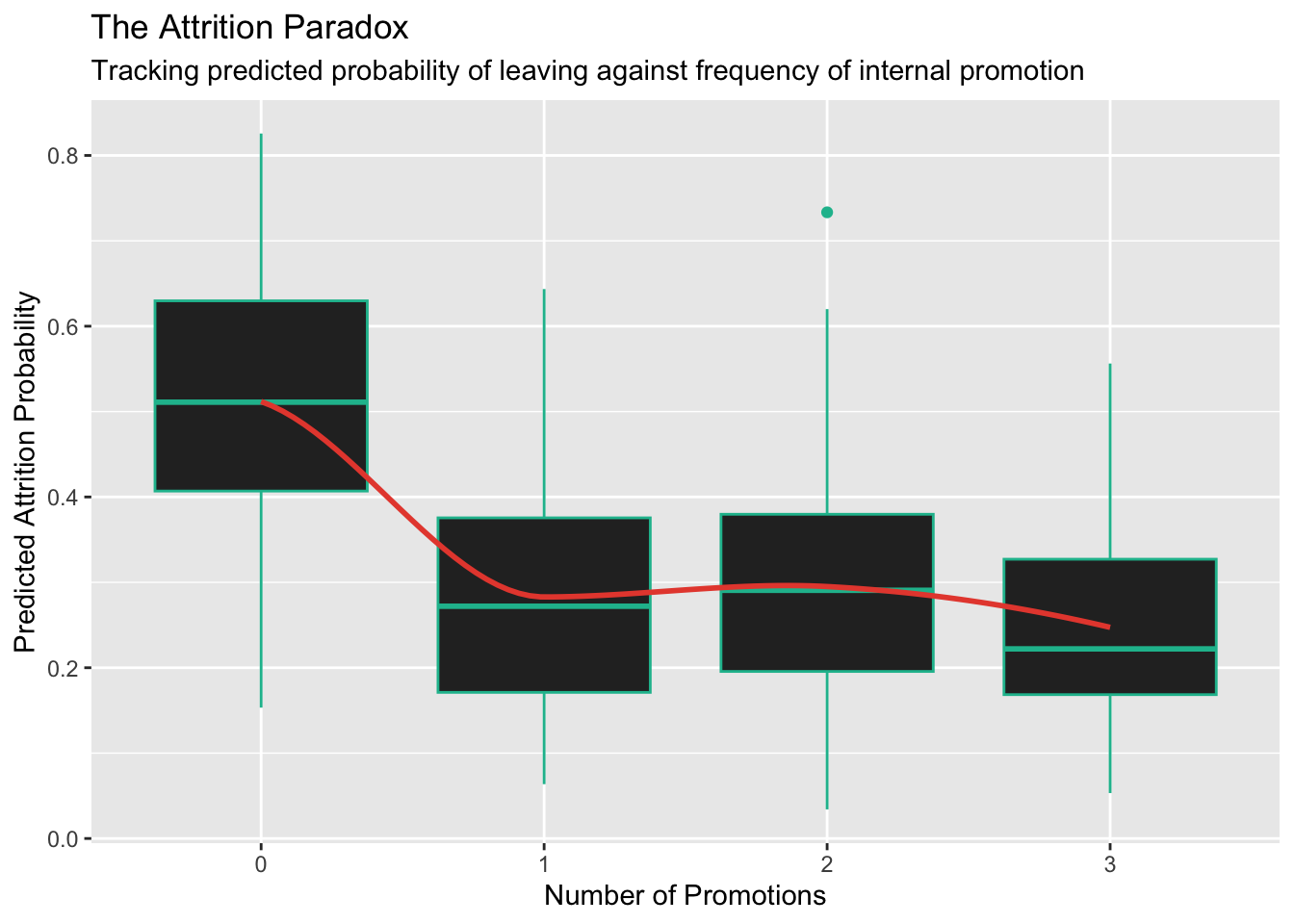
Critical Finding: The Promotion Attrition Paradox
A common organizational misstep is assuming that upward mobility permanently secures talent. In our exploratory parsing, we isolated a significant anomaly: Promotion History holds a strong positive correlation with near-term attrition.
Structural Explanations
This trend mirrors macro-market behavior detailed in recent comprehensive compensation and talent mobility studies. Research shows that within the initial 6 months following a promotion, employees face a 23% spike in flight risk compared to unpromoted baselines (18%).
This friction manifests primarily when rapid promotion cycles outpace formal training, leaving talent isolated in new leadership tracks without adequate pre-onboarding preparation. In this specific organization, 23% of the workforce received promotions over the trailing twelve months, frequently compounding multiple times without bridging support.
Maximizing Survey Reliability
A baseline correlation matrix highlights relatively minor individual linear relationships across standard workforce checkpoints. This pattern commonly presents itself when relying on standard point-in-time annual engagement surveys.
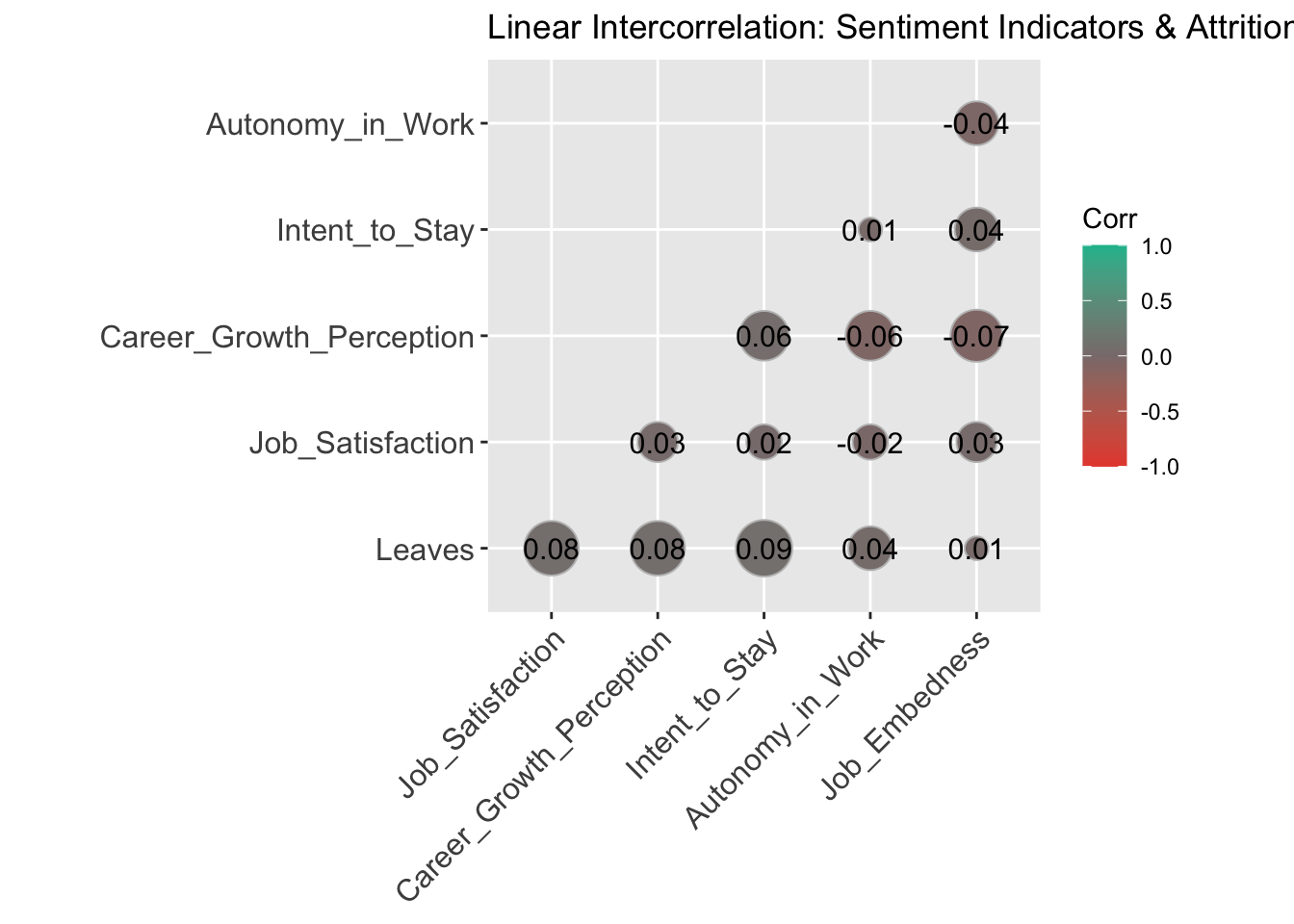
Relying on single-instance surveys introduces immediate sentiment bias (capturing acute mood states rather than systemic employment value). To secure cleaner data pipelines, we advise organizations to transition toward a pulse-survey distribution framework—sampling cross-sections at randomized, ongoing operational intervals to remove cyclical and emotional data noise.
Predictive Model Validation
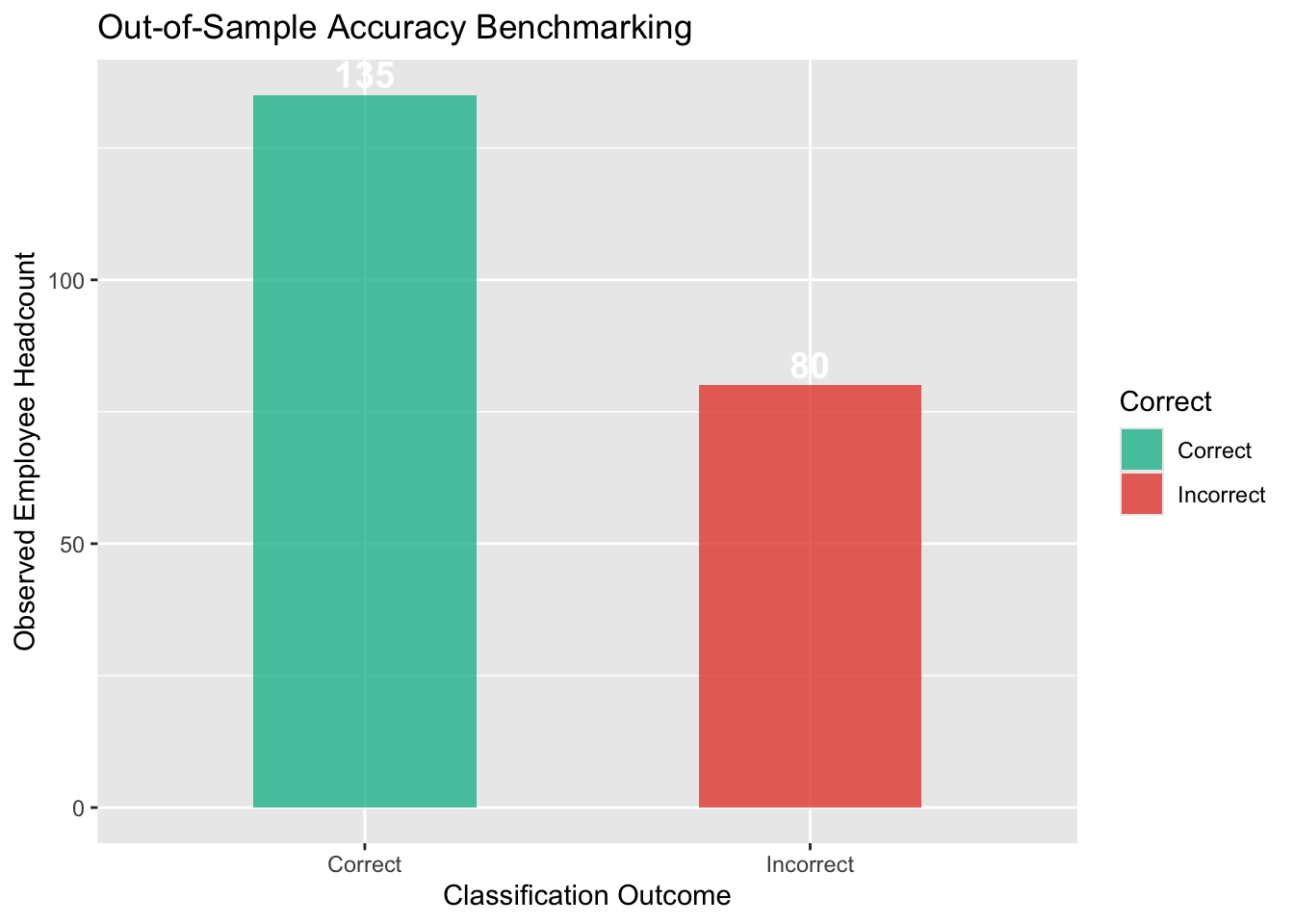
To test operational viability, we partitioned our historical datasets using a standard cross-validation split (60% training asset / 40% verification testing asset).
Business Impact & Return on Investment
The model performs with an out-of-sample prediction accuracy of ~75.8%, giving management a rigorous early-warning indicator.
By restructuring promotion workflows—specifically extending pre-promotion preparation schedules by 6 months—predictive projections isolate a 9% drop in promoted-tier attrition, precipitating a 4.5% downward shift in overall corporate turnover. For mid-sized organizations, this structural mitigation prevents significant operational losses tied directly to backfill recruiting overhead and lost engineering throughput.